Expats

Top 10 Tax Saving Tips - Cognizant UK Expats

Top10

EXPATS TAX REFUNDS – £9,500

POTENTIAL SAVING £9,500 per annum Depending on circumstances.

This is by far the best tax saving tip worth thousands of pounds – however it is only available to Expats.

Expats who come to work in UK are able to reclaim thousands of pounds in tax refunds if they meet certain conditions.

If you meet ALL the criteria below then you will be due a tax refund

  1. Are you an Expat who has come to work in UK
  2. Have you been in UK for less than 5 years
  3. Were you seconded to work in the UK by your employer

If you answer yes to all the above then you will be entitled to claim thousands of pounds in tax refund. Contact us and we will work out the tax refund due to you.
Telephone:  0207 112 8312 

CHECK YOUR TAX CODE – £500

POTENTIAL SAVING £500 per annum Depending on circumstances.

If you’re on the wrong code, you may be entitled to pay less tax in coming months, or receive a refund for previous years.

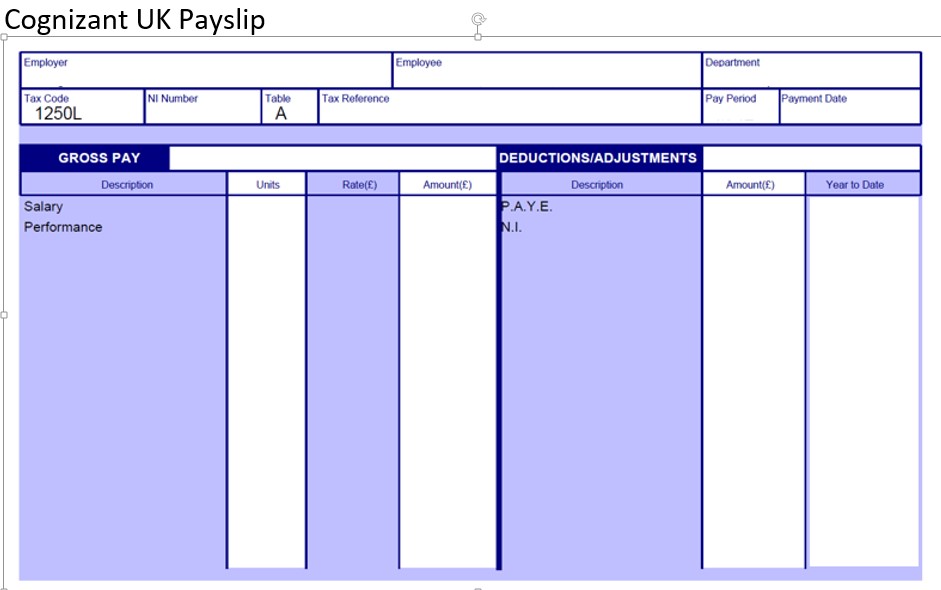
The tax code for the tax year ending 5th April 2021 is 1250L. If however there is a mistake in your tax code and you are given say 1125L then you will be paying too much tax. If you are a 40% tax payer, you will pay £500 more tax if your tax code is 1125L instead of 1250L.

TRANSFER OF MARRIAGE TAX ALLOWANCE – £250

POTENTIAL SAVING £250 per annum Depending on circumstances.

You can save up to £250 if ALL of the below apply to you.

  1. Are you married
  2. Your spouse on very low income or not employed

You might be entitled to transfer up to £1,250 of your spouse’s allowance to you thereby reducing your tax liability by £250.

You can backdate your claim to include any tax year since 5 April 2016 that you were eligible for Marriage Allowance.

Your tax bill will be reduced depending on the Personal Allowance rate for the years you’re backdating.

Call us if you think this applies to you and we will assist you with this.

WORKING FROM HOME – £800

POTENTIAL SAVING £800 per annum Depending on circumstances.
You may be able to claim tax relief for additional household costs if you have to work at home on a regular basis, either for all or part of the week. This includes if you have to work from home because of coronavirus (COVID-19).

You cannot claim tax relief if you choose to work from home.
Additional costs include things like heating, metered water bills, home contents insurance, business calls or a new broadband connection. They do not include costs that would stay the same whether you were working at home or in an office, such as mortgage interest, rent or council tax.
You can either claim tax relief on:

  • £6 a week from 6 April 2020 (for previous tax years the rate is £4 a week) – you will not need to keep evidence of your extra costs. If you worked from home for 52 weeks and you were paying tax at 40%, then the tax reclaim will be £124.80
  • The exact amount of extra costs you’ve incurred above the weekly amount – you’ll need evidence such as receipts, bills or contracts. If however you incurred say £2,000 additional costs, then you will be able to reclaim 40% X 2,000 = £800 tax reclaim. You will however be required to keep DETAILED records, invoices and computations of how you arrived at the higher amount. Do not be tempted to do a “rough estimate” or to inflate the claim. We will not assist anyone who deliberately tries to inflate the reclaim.

You’ll get tax relief based on the rate at which you pay tax. For example, if you pay the 20% basic rate of tax and claim tax relief on £6 a week you would get £1.20 per week in tax relief (20% of £6).

MILEAGE – £360

POTENTIAL SAVING £360 per annum Depending on circumstances.
Employees that use their own car for business journeys can claim tax relief.
A business journey will be travel from one business site to another business site (Not for travel from home to work)
For example

If an employee travels in their own car from home to work, then this is NOT classified as a business journey
If an employee travel in a friend’s car as a passenger then the employee can NOT claim (however the friend may be able to claim)


If an employee reaches work in their own car and then is required to go to another site, then that journey will be classified as a business journey and the employee will be able to claim 45p per mile for the first 10,000 miles in a tax year. You can only claim this if the employer has not reimbursed you for the travel.


So if an employee did 2,000 business miles in a tax year in their own car, then the approved mileage allowance will be 2,000 miles @ 45p per mile = £900. If the employee is a higher rate tax payer then the annual tax saving will be 40% X £900 = £360.
You will need to keep detailed records of the date you did the relevant journey, the starting point of your journey, the end point of journey and the EXACT miles incurred. Do not be tempted to inflate the expense and as we never assist anyone who tries to deliberately inflate expense claims.
You can’t claim separately for owning and running costs like fuel, insurance, repairs etc, as the business mileage rate covers these expenditures. If they instead use a company car for business travel, they can claim on what they’ve spent on fuel and electricity, providing accurate records are kept.

TAX SAVING ACCOUNT (ISA) – £340

POTENTIAL SAVING £340 per annum Depending on circumstances.

An ISA is a savings or investment account you never pay tax on. There is no income tax payable on the interest or dividends received and no Capital Gains tax payable on the increase in value of the investment. You can save up to a maximum of £20,000 per year (for 2020/21).

Say you invested £20,000 each year into an ISA for 5 years. The total investment will be £100,000. If in the current tax year, assume the investment appreciated in value by 13% and you received dividends at 2.5% in the year. The Capital gains will be £13,000 and the dividend income will be £2,500.

For Capital Gains, the first £12,300 is exempt from tax and for dividends, the first £2,000 is exempt from taxes.

If this investment was NOT held in an ISA, then you would have to pay Capital Gains tax on (£13,000 – 12,300=£700). For higher rate tax payer, the tax rate is 20% (NOT 40%). So tax payable will be £140.

For dividends, the tax payable will be (£2,500 – £2,000) = £500. The higher rate tax payer will pay 40% on this = £200.

However if this investment was held in ISA, then there would be no tax payable. No capital gains tax and no income tax. Therefore under these circumstances, you would save £540 + £400 = £940.

Each tax year, you get an ISA allowance which sets the maximum you can save within the tax-free wrapper from April to April. For the current tax year this is £20,000.

PENSION SCHEME

Only IFA registered Pensions Advisors are allowed to advice you on pensions and therefore we cannot estimate potential savings.

Please do not rush out to take out a pension based on the information we have provided. You will need to speak to an IFA registered pensions advisor who will work out whether a Pension is suitable for you.

If you are a basic-rate taxpayer (20%) and you wanted to increase your pension by £100 the amount taken off your net salary would only be £80.  The government adds an extra £20 on top – what it would have taken in tax from £100 of your salary. Higher-rate (40%) taxpayers will have only have £60 taken off to achieve the same £100 pension pot. The balance £40 would be added by the government.

There are many thresholds and lifetime limits, but the bottom line is there is a potential for tax saving which a registered IFA advisor will be able to assist you with.

RENT ROOM IN YOU HOME – £3,000

POTENTIAL SAVING £3,000 per annum Depending on circumstances.

The Rent a Room Scheme allows owner occupiers and tenants to receive tax-free rental income if you provide furnished accommodation in your only or main home.

For the tax year 2019 to 2020, the annual Rent a Room limit is £7,500. The limit is the same even if you let accommodation for less than 12 months.

To be eligible for this scheme:-

  • The room you let out must be in your main home.
  • The room must be furnished

If your gross receipts are less than £7,500, you’re automatically exempt from tax on that income.

So if you let out a furnished room in your main home and you are a 40% tax payer, you will benefit by 40% X £7,500 = £3,000 tax saving.

Example: Say you took a rental of 2 bedroom flat in Watford “Branscombe House, Gisburne Way, Watford, Hertfordshire WD24” at £1,000 per month (£12,000 pa). Watford is about 1 hour by tube to central London.

You rented out one room to your friend at £625 per month = £7,500 per annum. Your total cost to rent will be £12,000 – £7,500 = £4,500 per annum which is just £375 per month.

Under normal HMRC rules, you would be taxed on £7,500, however under the rent a room scheme, no tax would be payable, thus a 40% tax payer would save £3,000 in tax.


CHILDCARE – £2,000

 POTENTIAL SAVING £2,000 per annum Depending on circumstances.

 Tax-free childcare pays working parents a 25% top-up based on what they pay for childcare. The Maximum amount claimable is £2,000 a year when parents pay out at least £10,000 per annum.

Conditions:

You and your partner must be in work and must both earn at least national minimum wage or living wage for 16 hours a week.

The government will pay 25% of what you pay a childcare provider via an online account – the childcare must be approved.

Pros 

  • You can claim tax-free childcare at the same time as 30 hours free childcare if you’re eligible for both.
  • It only takes 20 minutes to apply online. As part of your application, you’ll find out if you’re eligible for both tax-free childcare and 30 hours free childcare.

 Cons 

  • It doesn’t apply to foster children.
  • You can’t claim if you or your partner earn more than £100,000.
  • It’s only for children aged 11 or under.
  • If you’re not working, you can only apply if you’re due to re-start work in the next 31 days.
  • If you have a partner, both of you must be working to be eligible.

LOW EMISSION CAR – £2,080

POTENTIAL SAVING £2,080 per annum Depending on circumstances.

If you get a company car from your employer, you will have to pay additional “Benefit in kind” tax.
The amount of tax payable depends upon the CO2 and NOx emissions.
Company car tax rates are designed to encourage company car drivers to choose cars with lower levels of CO2 and NOx emissions; incentives are offered both to the company and to the recipient of the vehicle to select low emission vehicles.

Under the current system, company and employee company car tax are both based on a percentage of the official value of the car (called the ‘P11D’), the percentage being primarily determined by the car’s CO2 emissions. For the employee, the Benefit-in-Kind (BIK) is then taxed at the appropriate personal tax rate – usually collected through PAYE.

Company car tax payable by an employee is based on the vehicle’s P11D value multiplied by the appropriate BIK rate (determined by the car’s CO2 and fuel type) and the employee’s income tax rate (basic rate of 20%, higher rate of 40%, or additional rate of 45%).

As an example of how company car tax works, let’s say you drive an £20,000 car and earn £75,000 a year. The CO2 emission of the car is 115 – 119 g/km a year, which has a BIK percentage rate of 26%. To calculate the benefit in kind amount, you’d multiply the £20,000 x 0.26 – which would be £5,200. To calculate overall company car tax would be £5,200 x 0.4. This would equate to £2,080 in annual tax for the company car.

If however you had a £20,000 electric car and earn £75,000 a year then the BIK percentage rate will be 0%. The tax payable will be £20,000 X 0% = £0.00

Therefore you would save £2,080 if you swapped for a lower emission car.